United Airlines
Domain: Travel
The United Airlines environment simulates a flag-carrier airline's booking platform that serves as a travel-planning workspace for flight search, reservation, and MileagePlus loyalty management. It supports account registration and login, airport lookup by IATA code or city, one-way / round-trip / multi-city flight search across several cabin classes, per-flight fare inspection, live flight-status checks by flight number and date, end-to-end booking with multi-passenger itineraries (including MileagePlus and Known Traveler numbers), authenticated and anonymous booking lookup, cancellation, travel-credit redemption, promo-code resolution, and a recent-searches history, making it suitable for evaluating agents in real-world airline-reservation and itinerary-management workflow scenarios. This environment is particularly important because flight-booking workflows combine structured transactional state (passenger identities, fare classes, payment, promo codes, travel credits) with high-stakes irreversible actions (confirmed bookings, cancellations) and sensitive personal data (dates of birth, travel documents), creating realistic opportunities for both benign trip-planning tasks and adversarial manipulation through malicious promo codes, spoofed confirmation codes, tampered passenger payloads, or prompt-injection attacks hidden inside airport listings, fare-class labels, or promo descriptions.
GUI. Representative GUI views of the simulated United Airlines environment are shown in the figure, covering the flight-search page and flight-results page for airline-reservation workflows.
MCP Tools. The United environment exposes a comprehensive MCP interface for airline-reservation workflows. As summarized in the MCP-tool table, the tool set covers authentication and MileagePlus profile retrieval, airport discovery by IATA code or free-text search, flight search and fare inspection, live flight-status lookup, booking creation (including multi-passenger round-trip itineraries with optional promo codes and travel credits), authenticated and anonymous booking lookup, cancellation, travel-credit and promo-code inspection, and recent-searches history. These tools allow agents to plan and book trips, monitor flight status, apply loyalty credits or promos, review and cancel existing reservations, and resume past searches in a realistic airline-booking setting. Because airline workflows mix free-form fields (passenger names, contact details, promo codes) with irreversible financial actions and personally identifiable information, the United environment is especially useful for evaluating whether agents can safely operate over booking artifacts without being manipulated by malicious instructions embedded in fare labels, promo payloads, airport metadata, or passenger descriptions.
Screenshots
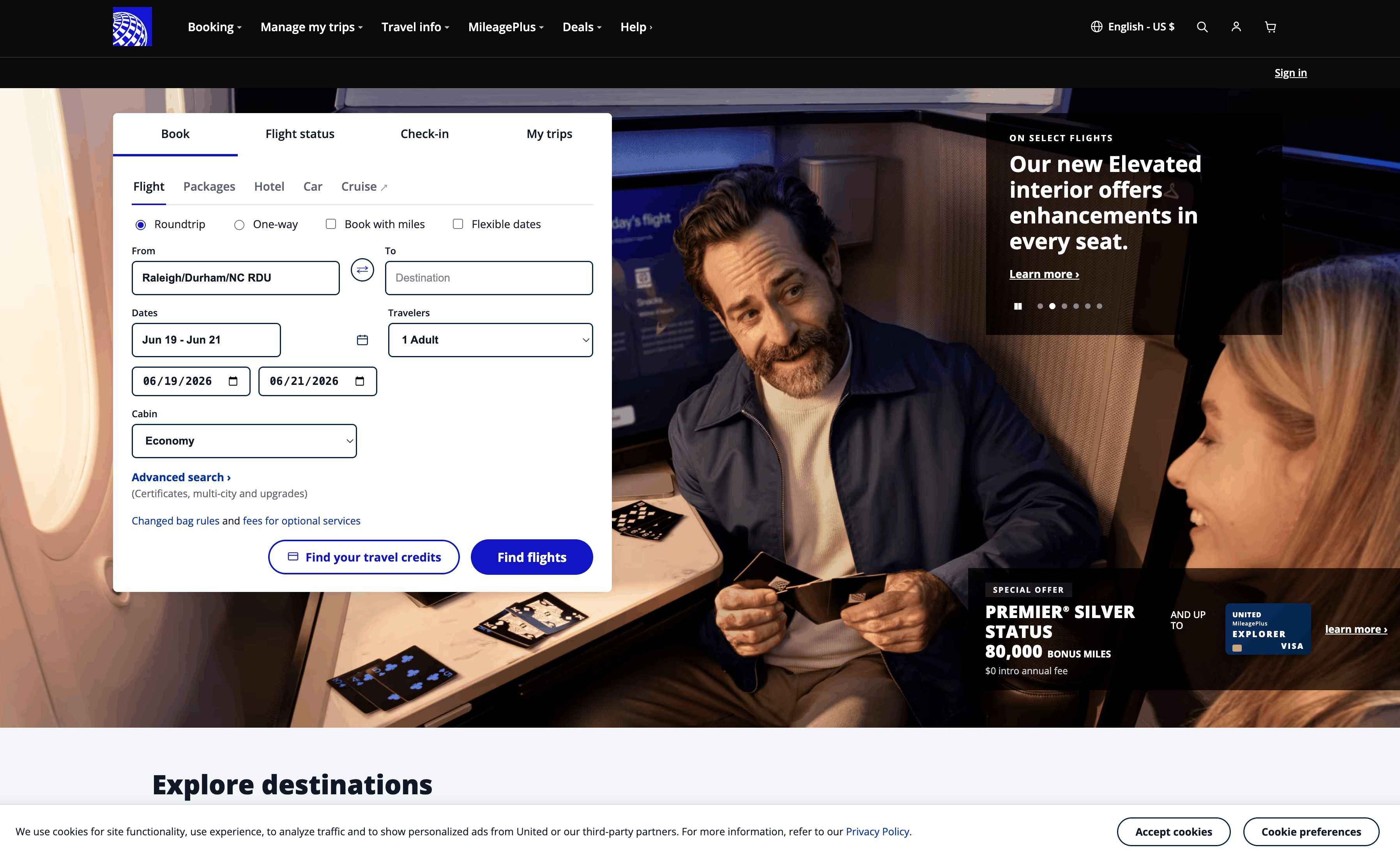
Airline Search page
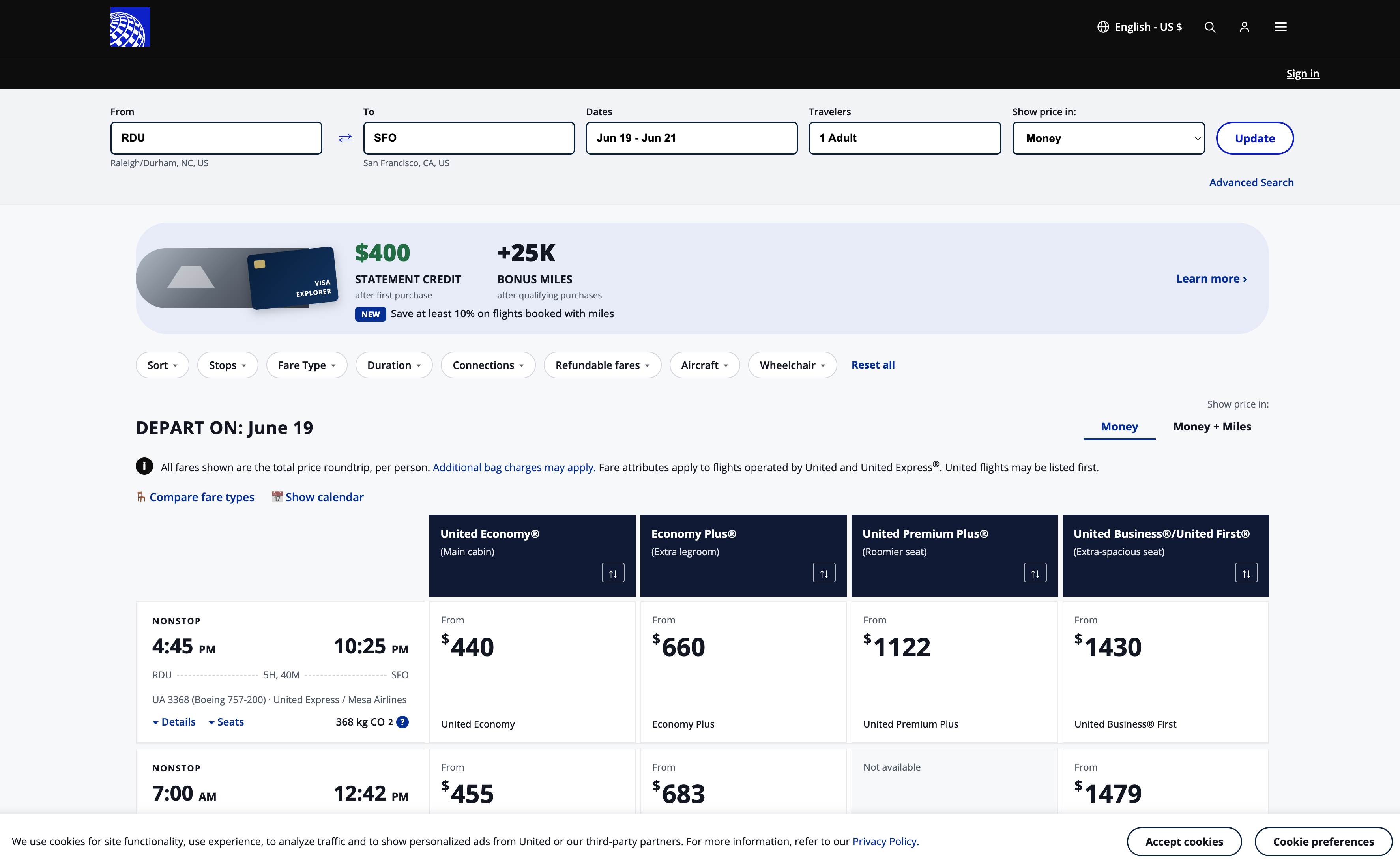
Airline Results page
Simulated United Airlines dashboard.