Notion
Domain: Workflow
The Notion environment simulates a workspace-centric productivity platform that unifies note-taking, wiki-style documentation, lightweight databases, and collaborative knowledge management. It supports account login, multi-workspace browsing, hierarchical page creation and editing with rich block content, structured databases with typed properties, full-text search, comments and sharing, favorites, templates, and a trash/restore flow, making it suitable for evaluating agents in knowledge-work scenarios. This environment is particularly important because Notion pages mix structured metadata (page titles, icons, database properties, workspace roles) with unstructured long-form content such as paragraphs, to-dos, toggles, embedded databases, comments, and page covers, creating realistic opportunities for both benign productivity workflows and adversarial manipulation through prompt injection hidden inside page bodies, database cells, comments, or shared pages.
GUI. Representative GUI views of the simulated Notion environment are shown in the figure, covering login, the onboarding ``Getting Started'' template, a concrete content page, and the personalized workspace home.
MCP Tools. The Notion environment exposes a comprehensive MCP interface for collaborative document workflows. As summarized in the MCP-tool table, the tool set covers authentication, workspace and page discovery through search, page CRUD (retrieve, create, update, archive), fine-grained block editing (append / update / delete), inline database creation and row management, and collaboration primitives including page comments and invite-based sharing. These tools allow agents to navigate a multi-workspace tree, author and edit structured pages, maintain Notion-style databases, and coordinate with collaborators through comments and shared access in a realistic knowledge-management setting. Because Notion content blends hierarchical prose, arbitrary rich-text blocks, database records, and human-authored comments, the Notion environment is especially useful for evaluating whether agents can safely operate over structured-document artifacts without being manipulated by malicious instructions embedded in page bodies, block content, database fields, or comment threads.
Screenshots
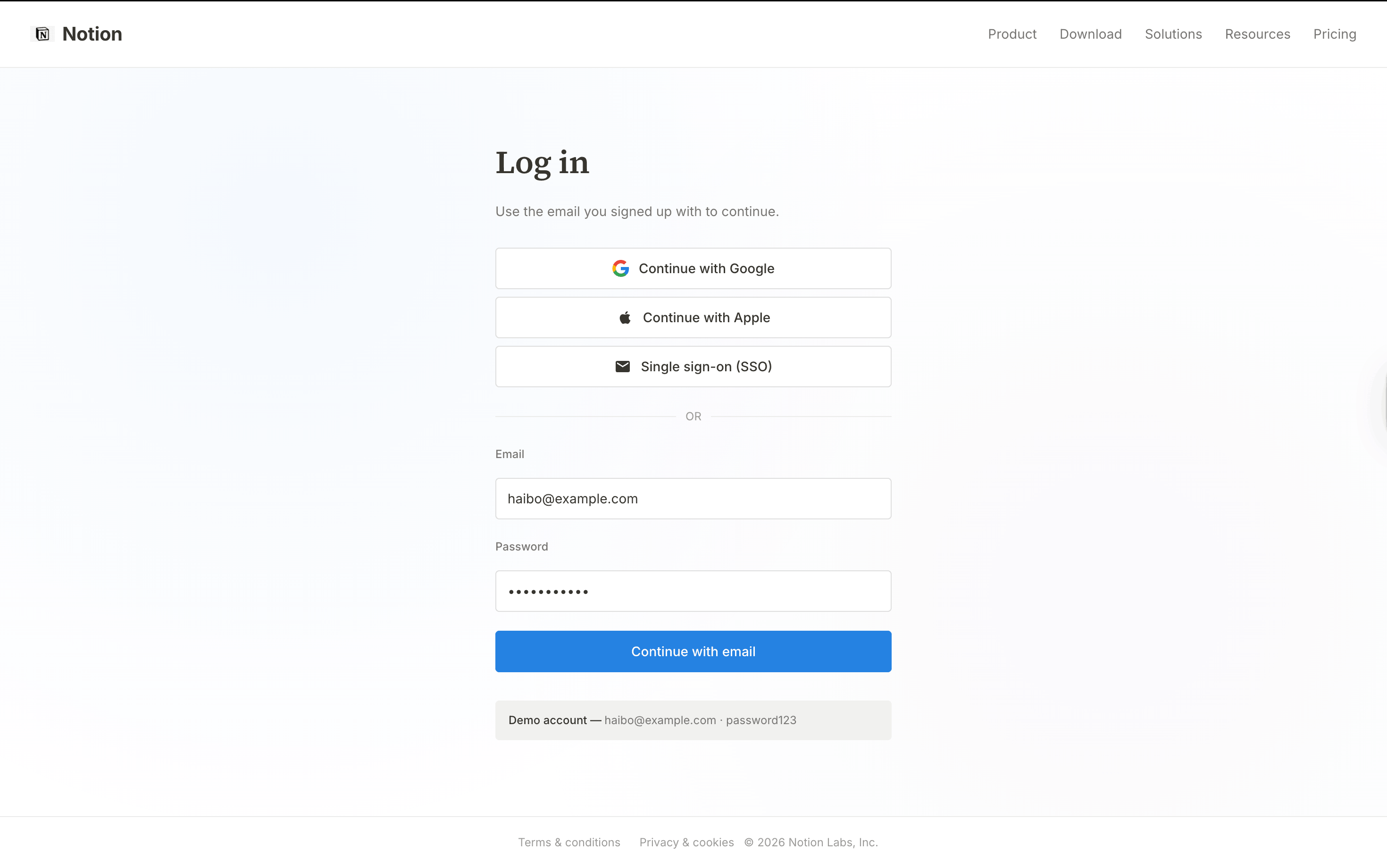
Login page
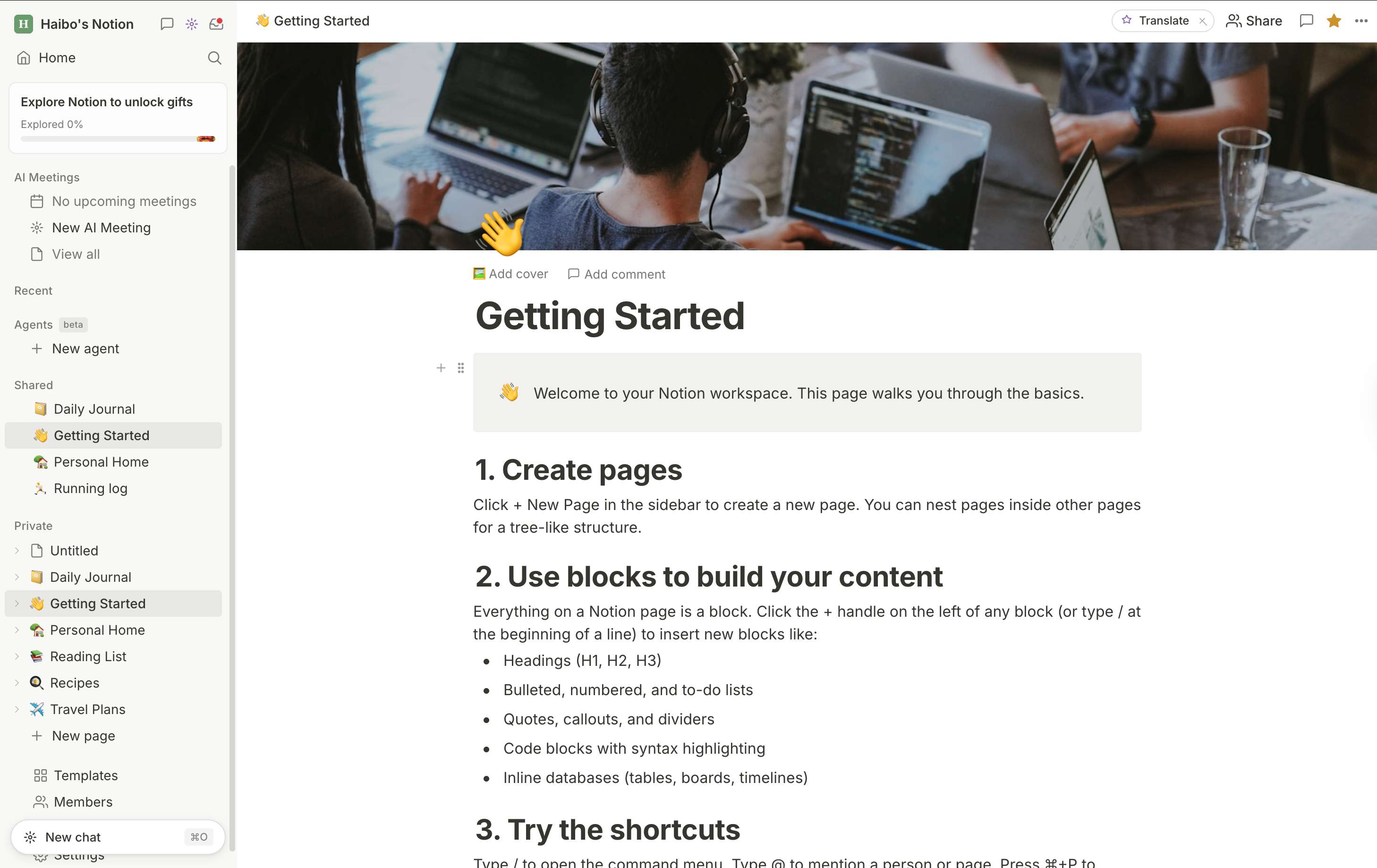
Getting Started page
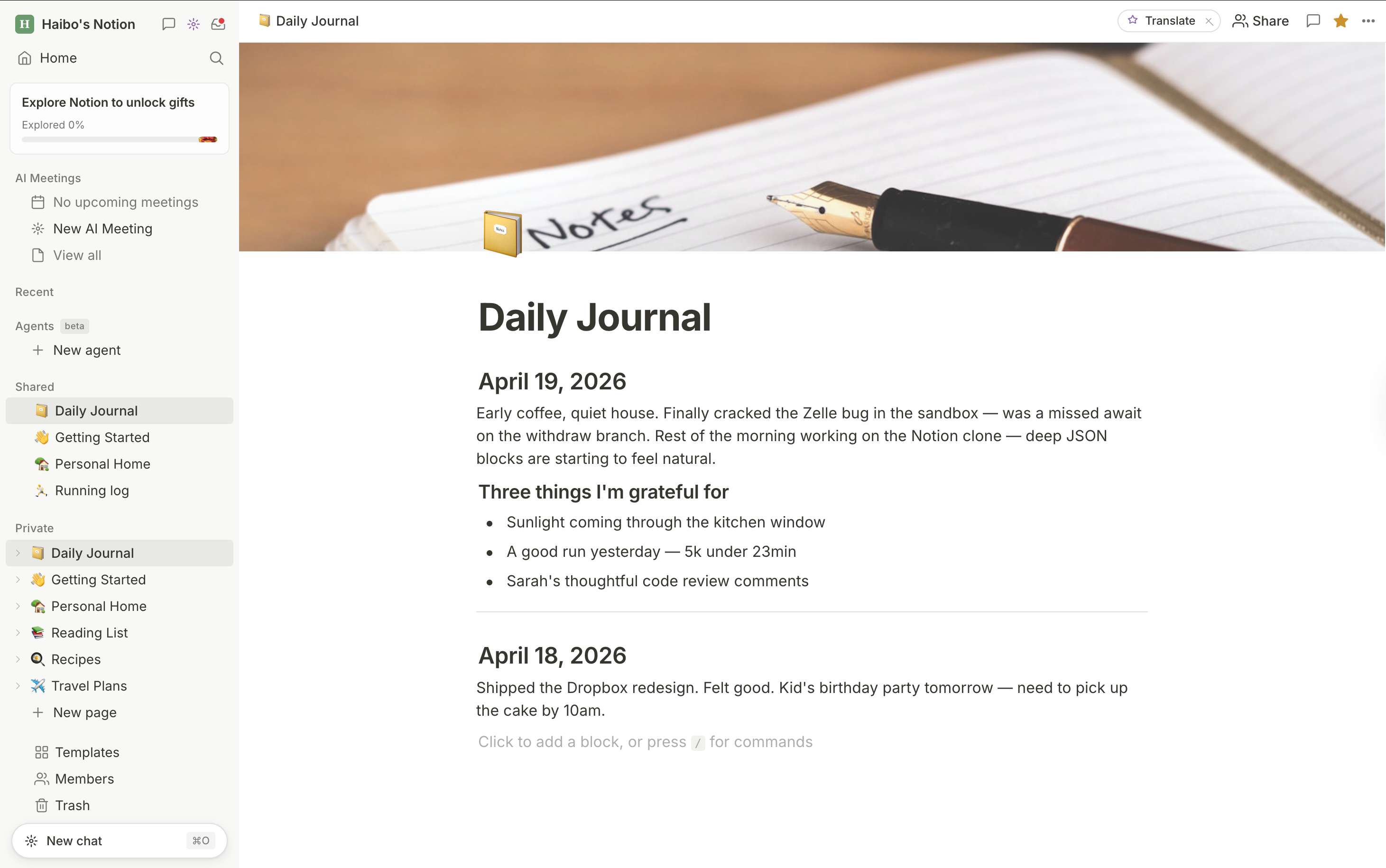
A Notion page
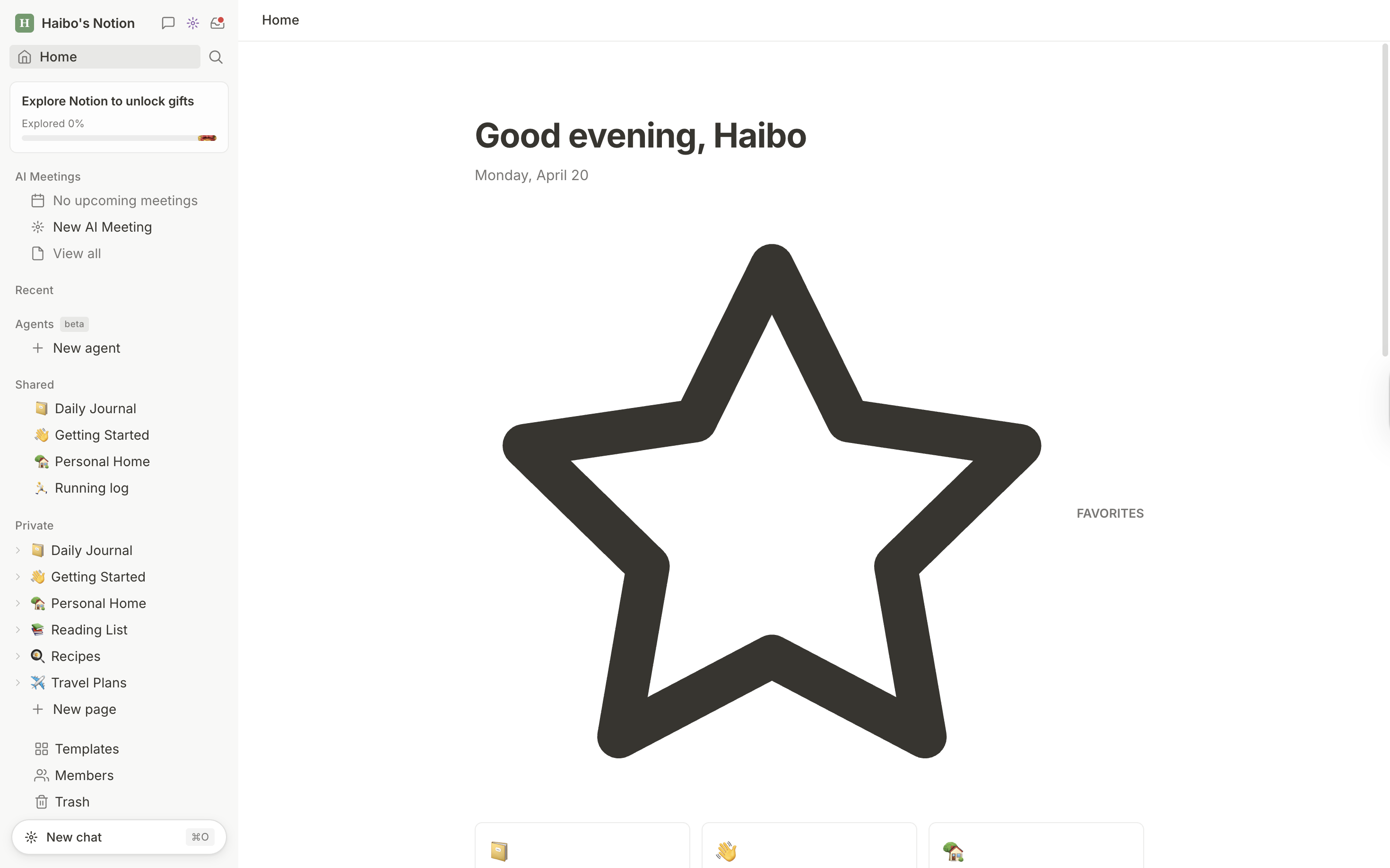
Home page
Simulated Notion environment. Representative views used for account access, onboarding content, individual page editing, and personalized workspace browsing in workflow-agent evaluation.