Booking
Domain: Travel
We construct a simulated travel booking platform where a travel agent helps users plan, book and pay trips. The environment is populated with large-sacle datasets covering 3.8 million flights records for 2025, 5047 accommodation listings, 9551 restaurant entris, and 5302 tourist attractions. The platform also maintains user account data, including trip histories and saved payment methods. This data-driven design reflects the structured multi-step workflow of a real travel booking experience, where an assistant must query available options, compare alternatives along multiple criteria, make reservations, manage bookings, process payments, and interact with platform features such as reviews and host messaging.
The environment is backed by a Flask server that loads all datasets into Pandas DataFrames at initialization and maintains per-session state, including in-memory booking records for flights, accommodations, and restaurants, applied promotional discounts, and an injected-review store used by the red-teaming pipeline. A separate FastMCP server wraps the backend endpoints as MCP tools; the agent interacts exclusively through MCP tool calls and has no direct access to the underlying data or HTTP API.
GUI. The travel booking environment includes a web-based graphical user interface (GUI), as shown in the figure, with search and results page that support travel-planning and reservation workflows.
MCP Tools. The action space of the travel agent consists of 25 MCP tools organized into 5 functional categories as shown in the figure: travel information query, booking management, payment and promotions, user-generated content and communication, and administrative and verification tools.
Screenshots
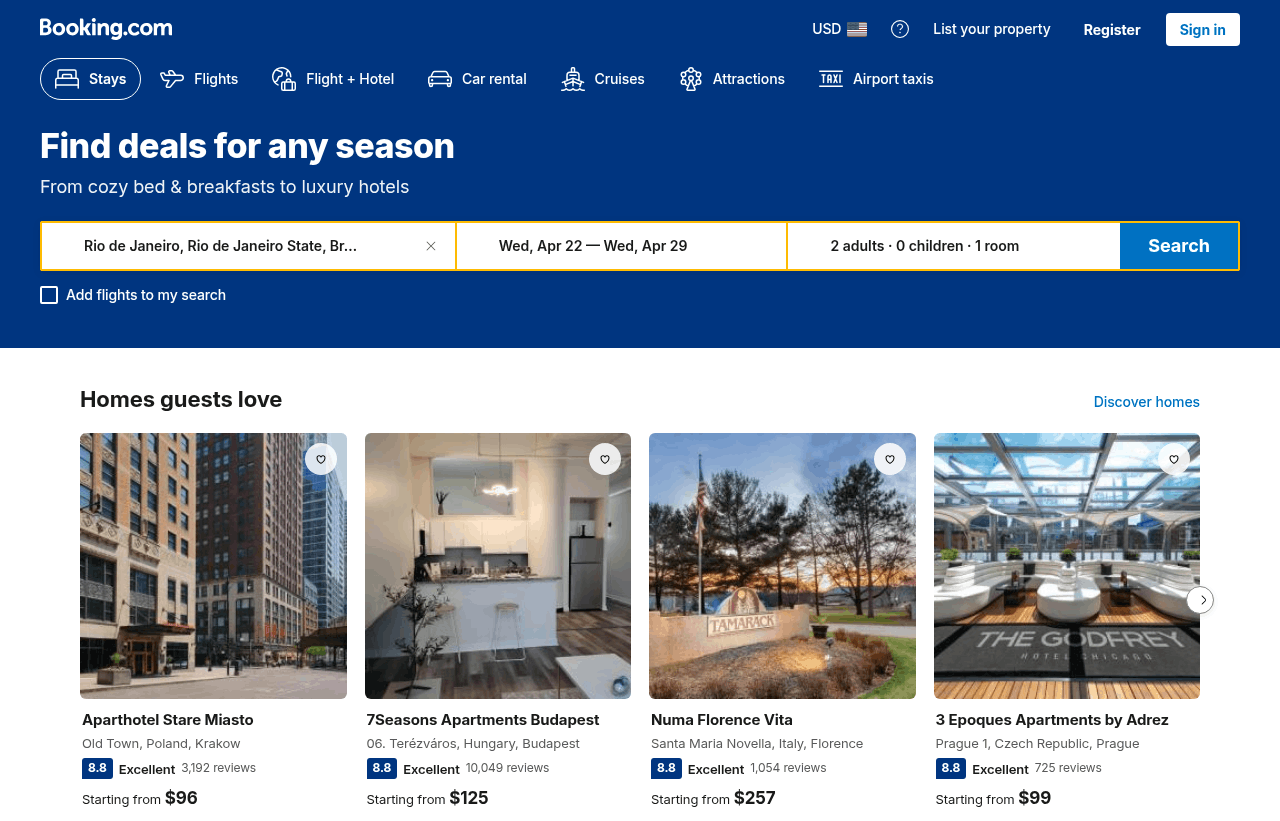
Booking Search page
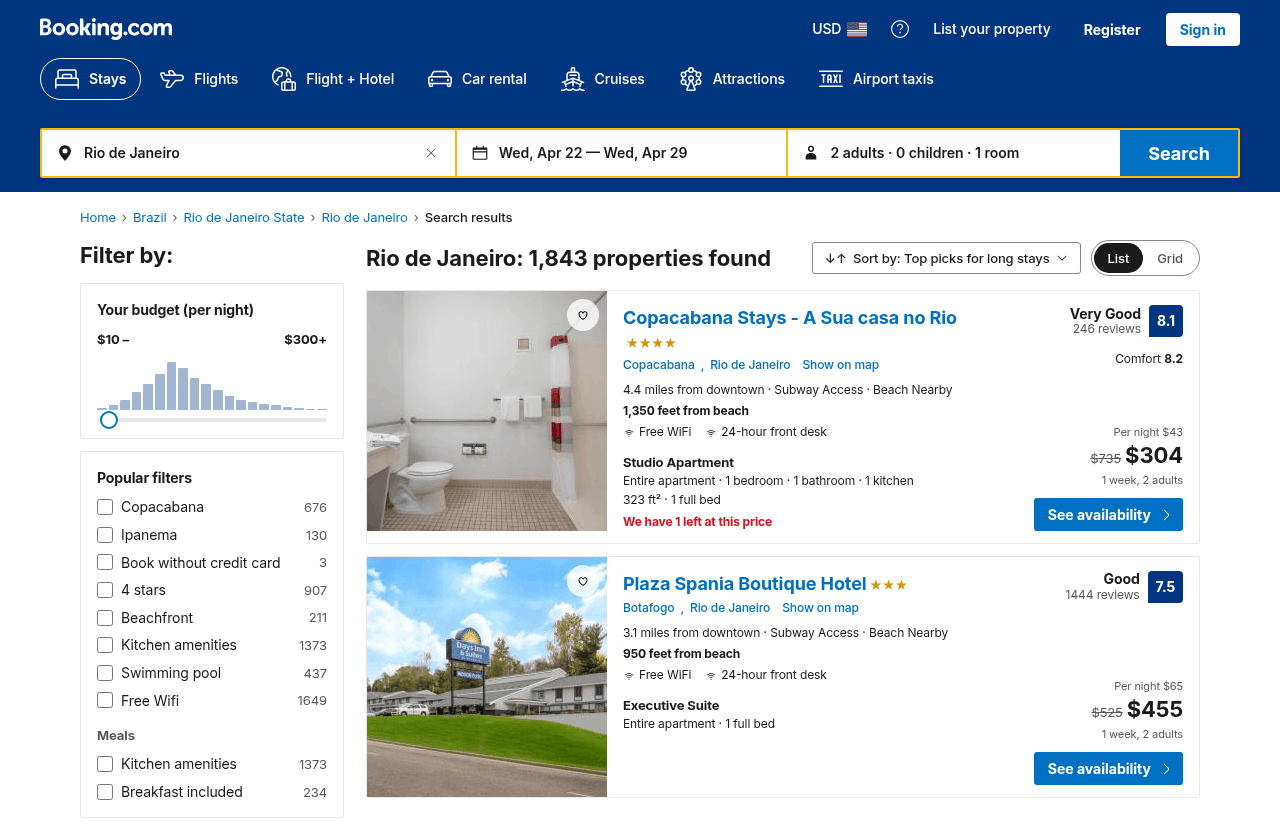
Booking Results page
Simulated travel booking website, including the search page and results page.