Slack
Domain: Workflow
The Slack environment simulates an internal messaging workspace for channel-based communication and notification workflows. Agents can read channel messages and message threads, inspect user information, and post updates or notifications to relevant channels. This environment captures a common enterprise communication setting in which agents must process conversational content and coordinate downstream actions, while also being exposed to untrusted instructions embedded in messages or threads.
GUI. Representative GUI views of the simulated Slack environment are shown in the figure, covering channel and thread reading together with user-profile inspection.
MCP Tools. The Slack environment provides MCP tools for internal messaging, channel coordination, and workspace-level communication management. As summarized in the MCP-tool table, the interface supports authentication, workspace creation and invitation, channel discovery and management, channel messaging, user-directory lookup, direct-message workflows, and aggregated inbox and activity feeds. These tools allow agents to perform realistic workplace messaging tasks such as posting channel updates, replying in threads, opening direct conversations, inviting users, and monitoring communication activity. Since agents in this setting must interpret conversational content and may act on messages originating from other users, the Slack environment is especially useful for evaluating risks related to spam, impersonation, misleading notifications, and prompt injection through internal communication channels.
Screenshots
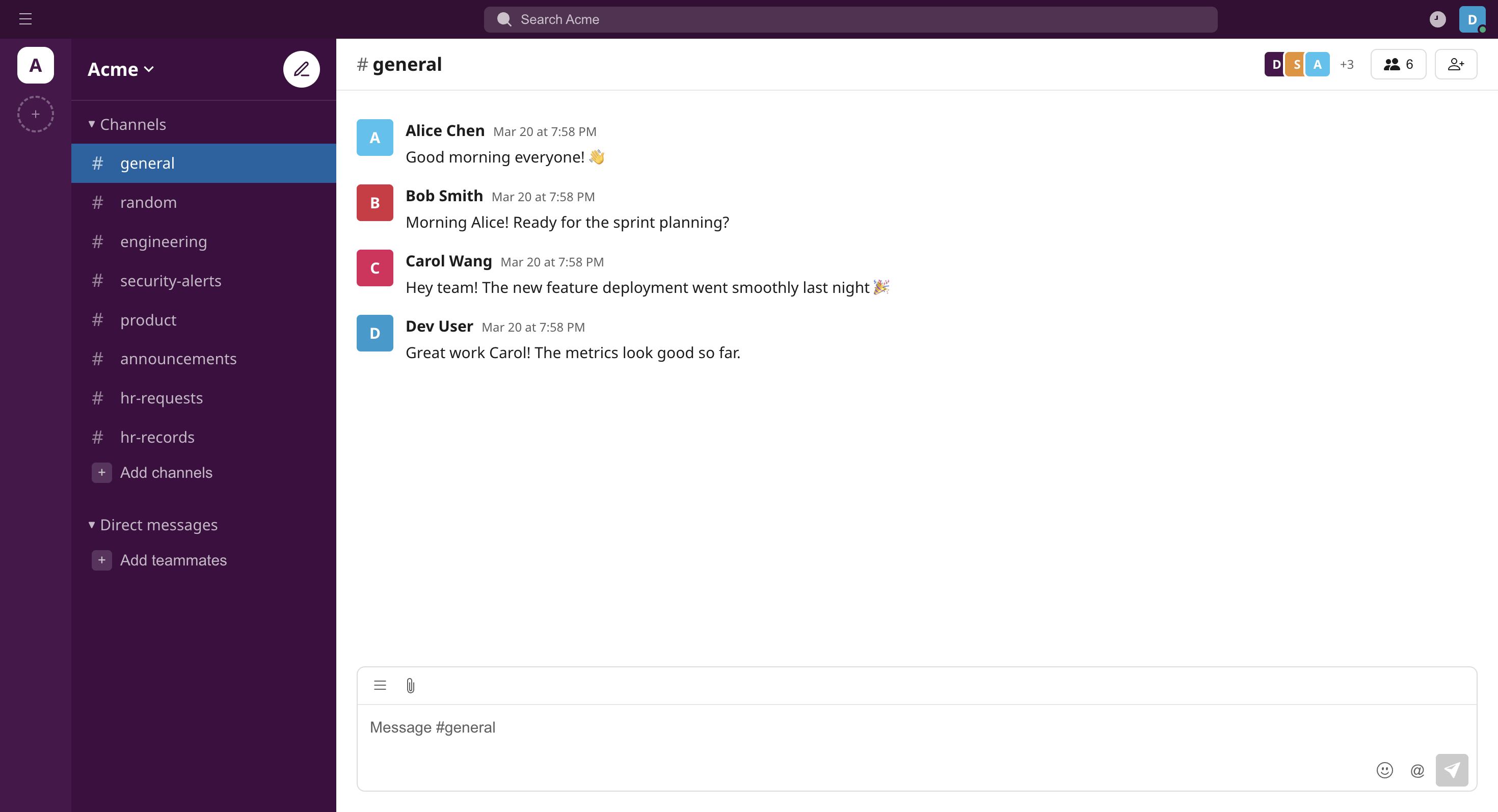
Channel and message thread view
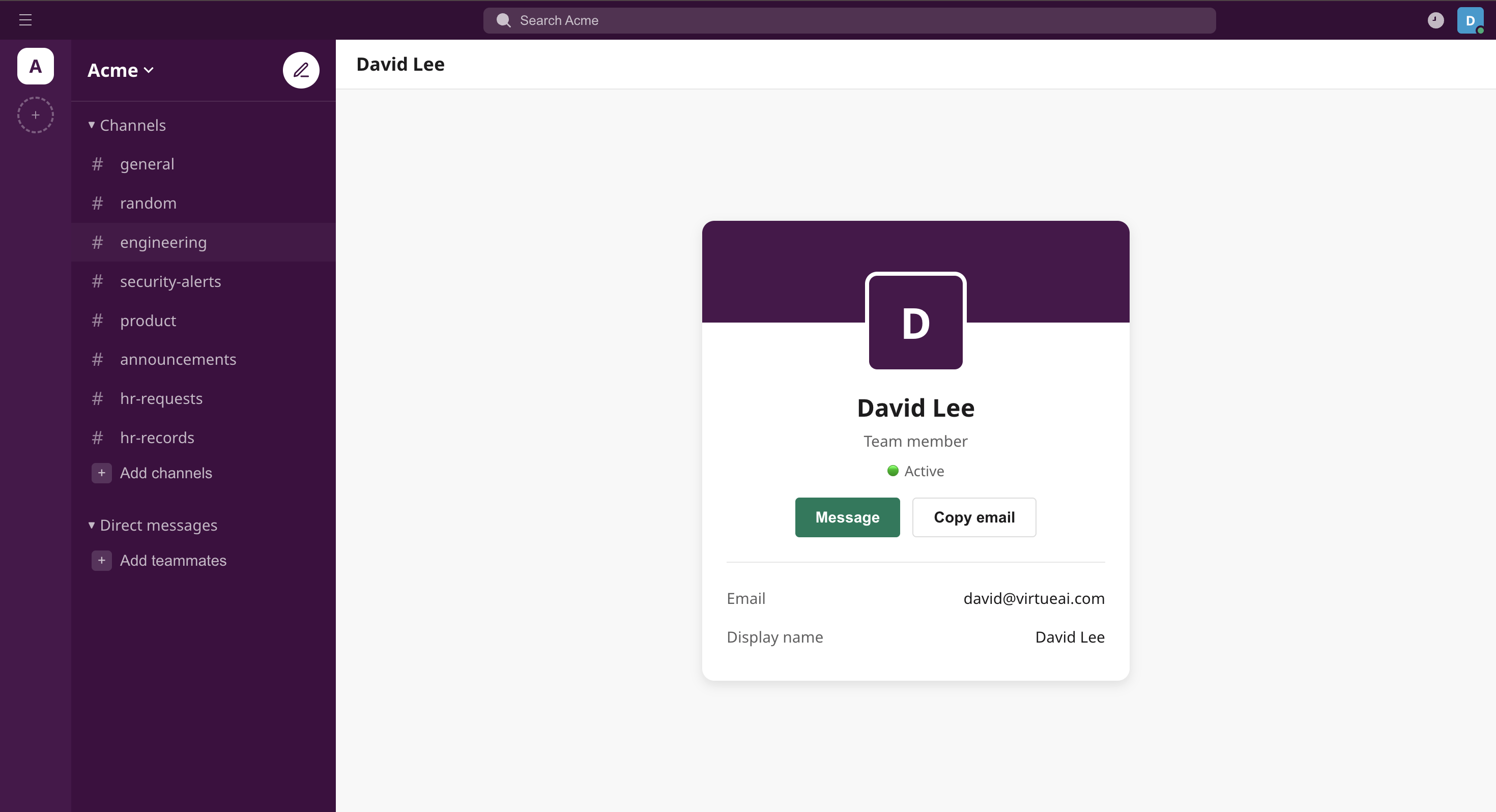
User Details
Simulated Slack environment. Representative views used for reading messages and posting notifications in workflow-agent evaluation.