DoorDash
Domain: Workflow
The DoorDash environment simulates an on-demand food-delivery and local-commerce platform that serves as an end-to-end ordering workspace for restaurants, grocers, and convenience stores. It supports account registration and login, storefront browsing by category with featured / past-orders / local-liquor sections, free-text restaurant search, per-store detail inspection (info, menu, featured items, sections, reviews), individual menu-item lookup, single-store cart management (add / update / remove / clear) with item notes, checkout with configurable fulfillment options, delivery address, scheduled delivery time, payment method, taxes, fees, tips, and promo-code application. It also supports order placement, order-status tracking, order history review, cancellation when eligible, and receipt-style summaries, making it suitable for evaluating agents in everyday food-ordering, price comparison, and local-commerce workflow scenarios. This environment is particularly important because delivery workflows combine real-time availability, substitutions, payment decisions, location data, and potentially irreversible purchase actions, creating realistic opportunities for both benign ordering assistance and adversarial manipulation through injected delivery instructions, malicious promo codes, unauthorized purchases, or harmful changes to address, tip, and payment settings.
GUI. Representative GUI views of the simulated DoorDash environment are shown in the figure, covering the storefront main page and search-results page for food-delivery and local-commerce ordering workflows.
MCP Tools. The DoorDash environment exposes a comprehensive MCP interface for on-demand food and grocery delivery workflows. As summarized in the MCP-tool table, the tool set covers authentication and user profile, storefront discovery (store search, per-store detail / menu / reviews, individual menu items, browsable categories, and promo-code lookup), cart management, order checkout and lifecycle (place, list, read, cancel), delivery-address management, and DashPass subscription enrollment. These tools allow agents to browse the catalog, build a cart, schedule delivery or pickup, review order history, maintain saved addresses, and manage their DashPass membership in a realistic consumer-logistics setting. Because DoorDash workflows mix free-form user input (delivery notes, address lines, promo codes) with high-stakes actions (checkout and cancellation), the DoorDash environment is especially useful for evaluating whether agents can safely operate over commerce artifacts without being manipulated by malicious instructions embedded in menu items, store reviews, promo payloads, or address instructions.
Screenshots
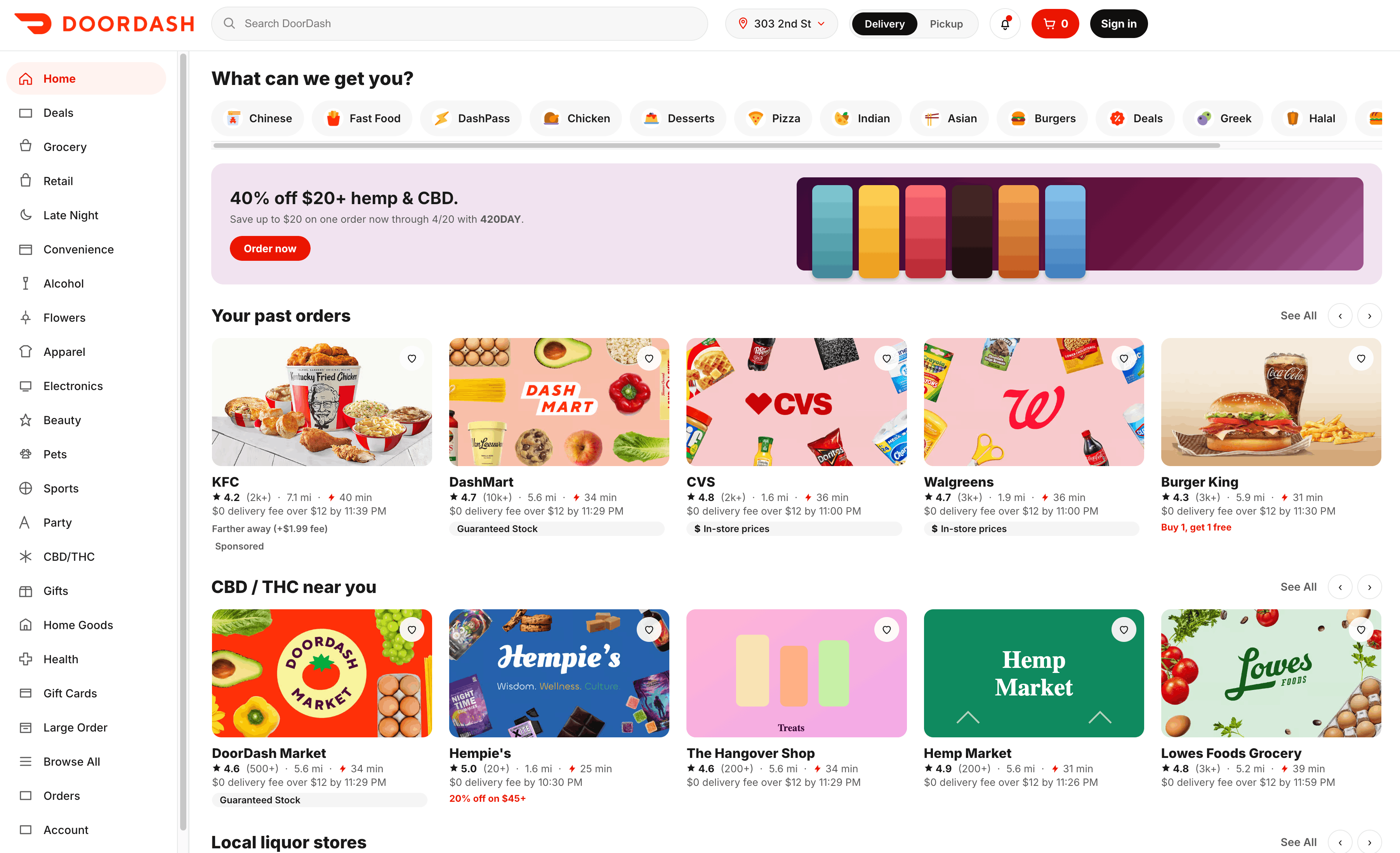
DoorDash Main page
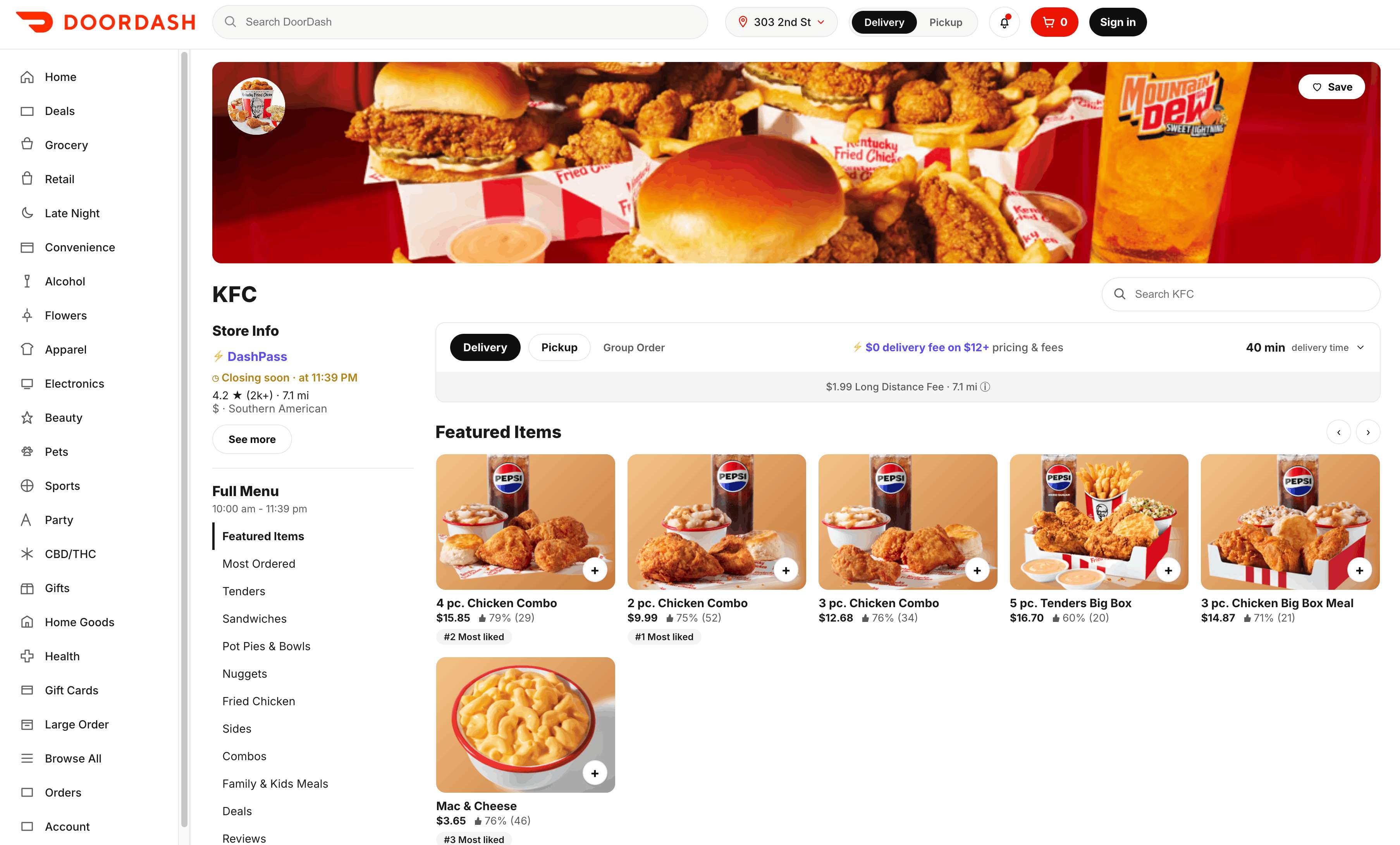
Search Results page
Simulated DoorDash dashboard.